
Occlusal instability occurs when the upper and lower teeth do not come together in a balanced, supportive way. When the bite is uneven, the jaw system is forced to compensate. Over time, this extra strain can lead to a variety of recognizable signs and symptoms.
Common signs of occlusal instability include:

• Uneven or premature tooth contact, where one or a few teeth touch before the rest of the bite is fully closed
• Excessive or uneven tooth wear, especially when teeth appear flatter or more worn than expected for a patient’s age
• Chipping, cracking, or breaking of teeth or restorations, including repeated failure of crowns, fillings, or veneers
• Jaw shifting or deviation when opening or closing, suggesting altered jaw movement
• Muscle tightness, tenderness, or fatigue, particularly in the jaw, temples, neck, or shoulders
• Jaw pain, clicking, popping, or stiffness, often noticed during chewing or upon waking
• Frequent headaches or facial pain with no clear cause
• Sensitivity or discomfort when biting, even in teeth that appear healthy
When these signs are present, they indicate that biting forces are not being evenly distributed. Instead, the jaw system is under constant mechanical stress. Without proper evaluation and correction, occlusal instability can contribute to ongoing tooth damage, muscle strain, joint overload, and the development or worsening of TMJ-related disorders.
Uneven Occlusal Contacts and Occlusal Wear

Uneven occlusal contacts occur when certain teeth absorb more force than others during biting or chewing. Rather than sharing pressure evenly across all teeth, excessive force is concentrated on specific areas. These teeth and restorations are then subjected to repeated overload.
Over time, this imbalance leads to occlusal wear, which may appear as flattened chewing surfaces, loss of natural tooth anatomy, chipping, or small fractures. These changes are not simply cosmetic or age-related. They are signs that biting forces exceed what the teeth can safely tolerate.
As wear progresses, the bite can become even more unstable. Changes in tooth shape alter how teeth meet, creating a cycle of increasing imbalance. This may result in tooth sensitivity, fractures, failed restorations, muscle fatigue, and added stress on the jaw joints.
Identifying uneven contacts early allows for timely treatment aimed at redistributing forces, preserving tooth structure, and protecting long-term jaw, muscle, and joint health.
Instability Inside the Temporomandibular Joint (TMJ)
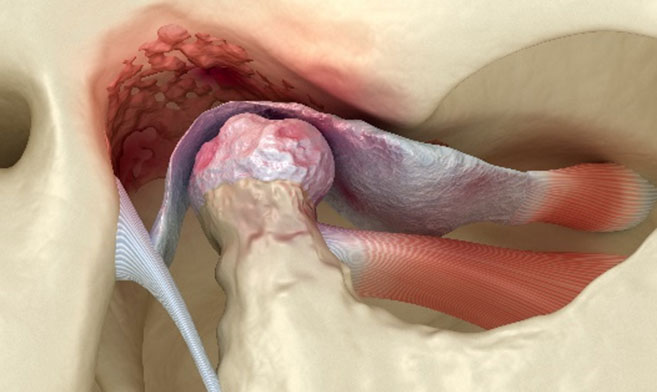
The jaw joints guide and support jaw movement. When the bite does not provide stable support, the joints are forced to compensate. This can lead to joint compression, inflammation, abnormal movement patterns, and symptoms such as clicking, popping, stiffness, or pain.
Over time, instability within the TMJs can affect not only the jaw, but also surrounding muscles and the neck, contributing to broader discomfort and functional limitations.
When the jaw joint loses stability, the normal balance between the jaw bone, cushioning disc, and joint surfaces is disrupted. As a result, pressure inside the joint becomes uneven. This can irritate the joint tissues and change the way the jaw moves. Over time, these changes may lead to inflammation, disc displacement, clicking or popping sounds, stiffness, pain, or difficulty opening the mouth comfortably.
When the joint is unstable, the surrounding muscles are forced to work harder to keep the jaw functioning and the head properly supported. This extra muscle effort can cause fatigue, tightness, or muscle spasms. At the same time, continued joint overload may speed up wear and degenerative changes inside the joint. Recognizing instability within the jaw joint is an important step in identifying the true source of jaw-related symptoms. Proper diagnosis allows treatment to focus on restoring joint stability, reducing strain on muscles and tissues, and supporting long-term comfort and healthy jaw function.