
In dentistry, one simple principle holds true: dental problems don’t resolve on their own. A small concern today often becomes a larger, more complex issue tomorrow. Many patients postpone recommended care because nothing hurts yet, schedules are busy, or the problem seems minor. We understand — life happens. However, teeth and gums respond differently than the rest of the body. Unlike skin or muscle, dental tissues can’t regenerate once damaged, and untreated disease continues to progress quietly under the surface.
Our goal is to help you protect your teeth for life, and timely treatment is one of the most effective ways to do that.
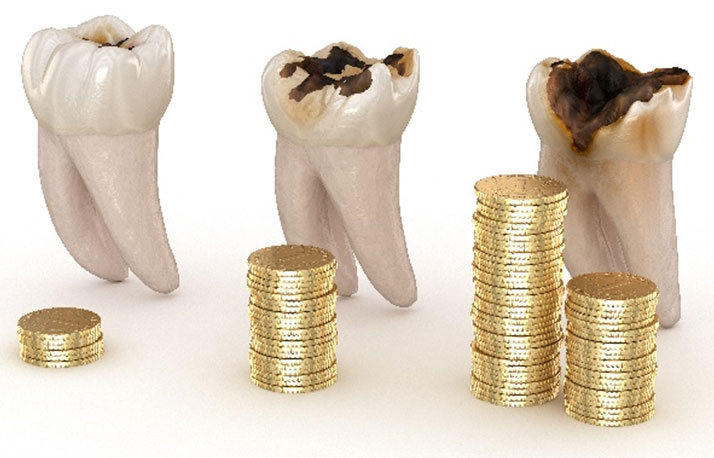
Dental problems often start quietly and pain comes later. Early decay, small cracks, leaking fillings, or inflammation rarely cause noticeable symptoms. By the time discomfort appears, the condition is usually more advanced. What starts as a simple filling can turn into a need for a crown, a root canal or even extraction and tooth replacement. Timely treatment preserves more natural tooth structure and reduces the need for invasive procedures.
Waiting Usually Costs More in the Long Run. Dental conditions progress in stages — and each stage typically requires a more complex and costly solution. The earlier we intervene, the more tooth structure we can preserve and the simpler the procedure becomes. When treatment is postponed, bacteria continue to spread, cracks deepen, gum tissue loses support, and the body responds with inflammation. None of this reverses on its own. Think of treatment like stopping a small leak before it floods the house. A filling is the “patch.” Ignoring it allows decay to grow, eventually reaching the nerve and the supporting bone. At that point, the tooth must be repaired more aggressively, or in some cases, removed and replaced entirely.
Living with a pending dental problem is like walking around with a ticking timer — it might not hurt today, but when it does, it demands attention immediately.

Emergency appointments can be stressful. Treatment choices become more limited, and procedures that could have been simple may now be more involved. Instead of planned, comfortable care — patients end up needing urgent relief.
While a healthy mouth allows you to enjoy meals without avoiding certain foods, chew comfortably and efficiently, sleep through the night without pain and maintain overall well-being and daily productivity, when pain is present, everything from eating to concentrating becomes harder. People often begin chewing on one side, avoiding certain foods, or altering daily habits — and over time, this can lead to muscle imbalance, TMJ strain, and excessive wear on the remaining teeth.
Delaying treatment often seems harmless, especially when there’s no pain. But dental disease moves quietly, and by the time symptoms show, the solution is rarely simple. Small problems become big problems. Big problems become painful and expensive problems. In dentistry, time is not neutral — it works against us. Treating early keeps dentistry simple, conservative, predictable, and far more cost-effective. Delay turns a filling into a crown, a crown into a root canal, a root canal into an extraction. The best time to take care of your teeth is before something hurts — and we’re here to help you do exactly that.