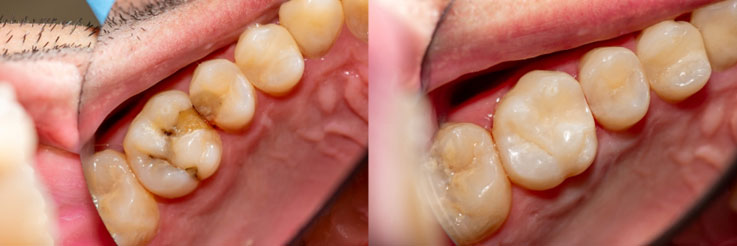
A dental filling restores a tooth that has been weakened by decay, cracks, or small defects. During the procedure, the dentist removes the damaged tissue, cleans the area, and places a durable material—usually a tooth-colored composite—to rebuild the missing structure.
A filling is considered prosthetic work because it replaces lost natural tooth structure with man-made material, and like any prosthetic, it has a limited lifespan and will eventually need to be replaced.

How We Restore Teeth with Precision and Care
But how to insure longevity of our dental work? When planning any dental restoration, there are many critical factors we must evaluate to ensure long-term success. First, all decayed and infected tooth structure must be thoroughly removed so the tooth is clean, stable, and free of bacteria. Next, we consider the tooth’s ability to resist recurrent decay, because even the best restoration can fail if new decay begins underneath it. We also assess the strength of the bond between the remaining natural tooth and the restorative material, as this connection determines how well the restoration will stay intact under function. We also have to look at how much pressure your teeth will put on the new restoration. If the bite pressure is higher than what the material can safely tolerate, the restoration may crack or break. By carefully checking your bite and how your teeth come together, we can choose the right material and design a restoration that will stay strong and last as long as possible.
In our office, we carefully design every step of the filling process. We thoughtfully choose the right materials and techniques for each individual tooth, ensuring the restoration is strong, long-lasting, and tailored to your unique needs. Let’s take a closer look.
What Makes a High-Quality Dental Filling? Understanding the Process
To make sure no decayed or infected tissue is left behind after removing a affected tooth structure, we use a special diagnostic dye. This dye gently stains any remaining infected areas, allowing us to clearly see and remove them. This extra step helps ensure the tooth is completely clean and free of harmful bacteria before the filling is placed.
Once all the decayed tissue has been mechanically removed and confirmed with the diagnostic dye, we take an additional step to ensure the tooth is truly clean. We apply a special, highly effective disinfectant that provides chemical cleaning and reaches deeper into the tiny dentinal tubules—areas that water alone cannot access. This helps eliminate any remaining bacteria that may not be visible.
This disinfecting step not only enhances the long-term success of the filling but also rehydrates the tooth, which can significantly reduce sensitivity after treatment.
Now it’s time to rebuild the part of the tooth that was lost. The first step in this phase is applying a primer and desensitizer. This material gently seals the freshly cleaned dentinal tubules, which helps prevent sensitivity after treatment. It also creates a healthier, more protective environment inside the tooth, reducing the risk of recurrent decay forming underneath the filling. By strengthening the bond between the tooth and the restoration, this step plays an important role in improving the long-term durability of the filling.
The next layer we apply is the bond, which acts like a specialized dental adhesive. This bonding agent creates a strong microscopic connection between the tooth and the filling material. It helps the restoration stay firmly attached and seals off any tiny spaces that could allow bacteria or fluid to leak in. This step is essential for preventing future problems and ensuring your filling remains stable and long-lasting.
Now it’s time to place the composite material—the part that actually rebuilds the missing portion of your tooth. In our office, we use a biologically active composite, designed not just to fill the space but to support the tooth’s natural health. This advanced material helps stimulate the regeneration of tooth tissues and is engineered to resist bacterial adhesion and invasion. In other words, the composite itself helps fight off potential bacterial contamination, adding an extra layer of protection for your restored tooth.
To finish strong, we carefully rebuild the biting surface so it fits in perfect harmony with the rest of your mouth. This means shaping the restoration so it can handle your full chewing forces without breaking, while also allowing your jaw to move smoothly during side-to-side and forward motions. When the bite is balanced correctly, the teeth glide over each other naturally, reducing stress and preventing unnecessary occlusal wear. This final step is essential for both comfort and long-term durability.
The Art and Science Behind a Durable Dental Filling
Not all fillings are the same. Dental work is not a commodity—it’s the result of a unique blend of art, science, and clinical expertise. Every restoration reflects the dentist’s professional philosophy, knowledge, attention to detail, and technical skill. The materials we choose, the techniques we use, and the care we take at each step greatly influence how long a filling lasts, how comfortable it feels, and how well it protects your tooth. In the end, the quality of a filling is shaped by the craftsmanship and judgment of the dental professional who provides it.