
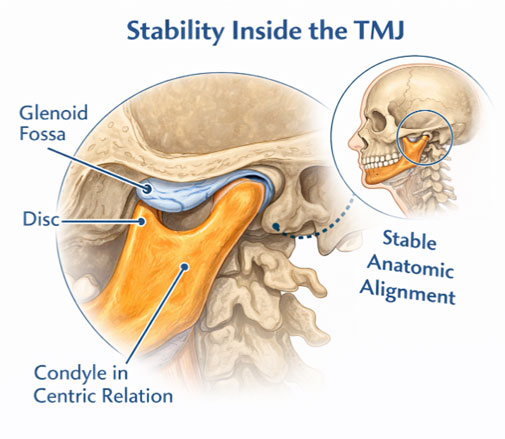
The stability of the stomatognathic system—which includes the mandible, temporomandibular joints (TMJs), teeth, and associated musculature—relies on two fundamental factors that govern healthy function and load distribution.
Stable joint position within the temporomandibular joints (TMJs)
This refers to the proper orthopedic relationship between the mandibular condyles and the cranial base within the glenoid fossae. When the condyles are positioned in a stable, physiologic joint position, the mandible can move freely and predictably without excessive stress on the joint structures, articular disc, or surrounding soft tissues.
Stable occlusal contacts between the upper and lower dentition

Stable occlusion ensures that, in a static position, occlusal forces are evenly distributed across the dentition, providing adequate posterior support and minimizing overload of individual teeth or joints. During functional movements such as chewing and speaking, the teeth should glide smoothly against one another without interferences, allowing coordinated muscle activity and protecting the TMJs from abnormal loading.
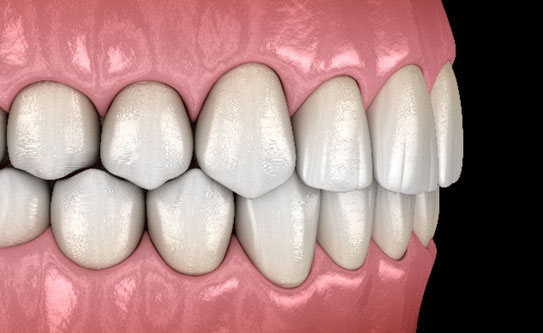
When the stomatognathic system becomes unstable, normal jaw function is disrupted and a range of functional problems may develop. Jaw movements can become uneven or asymmetrical, causing the jaw to deviate during opening, closing, or chewing. To compensate for this imbalance, the surrounding muscles often overwork, leading to muscle tension, spasms, and persistent discomfort. At the same time, improper alignment and abnormal movement patterns can place excessive mechanical stress on the temporomandibular joints and teeth, contributing to joint irritation, accelerated wear, and damage to dental structures over time.
In summary, stability in both the TMJ and dental occlusion is key to preventing functional disturbances and mechanical trauma in the stomatognathic system.
